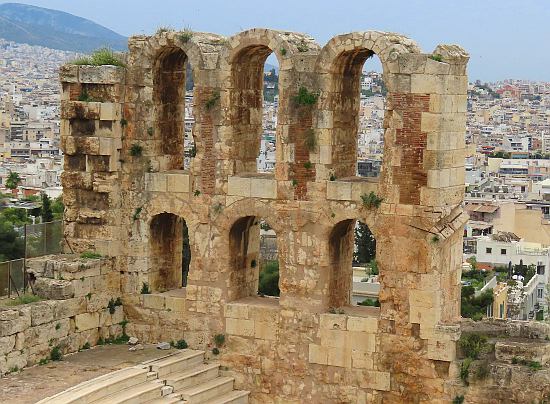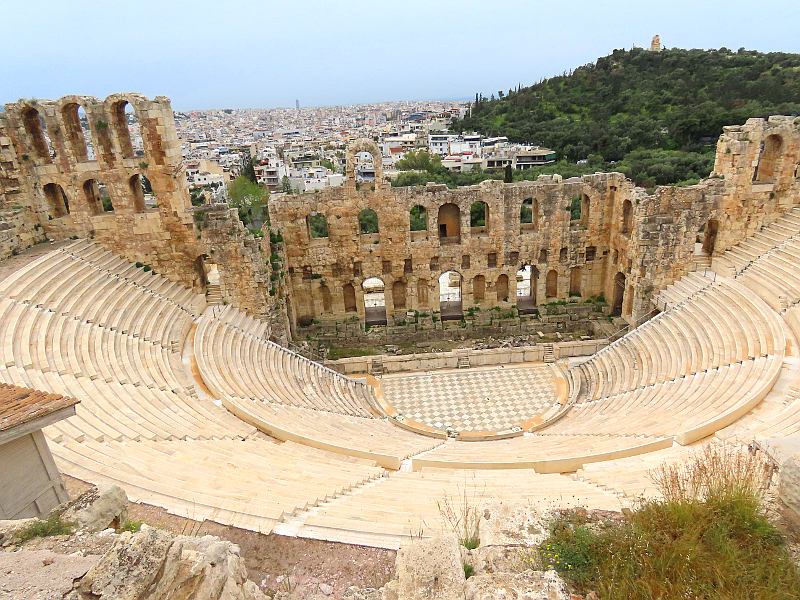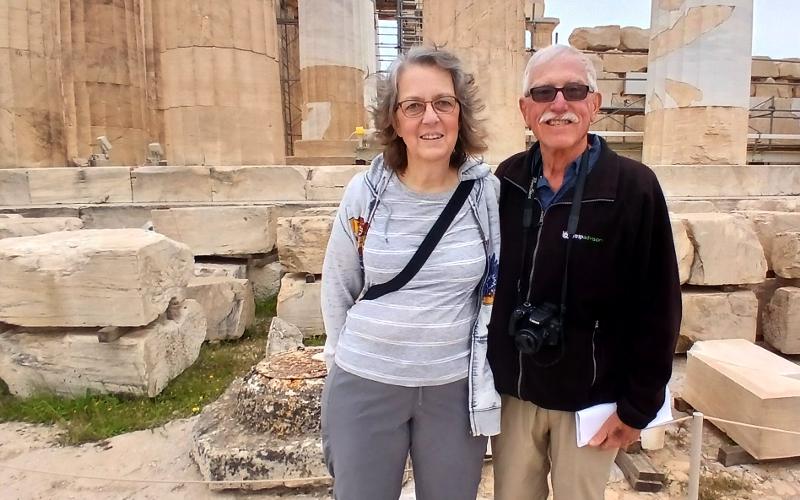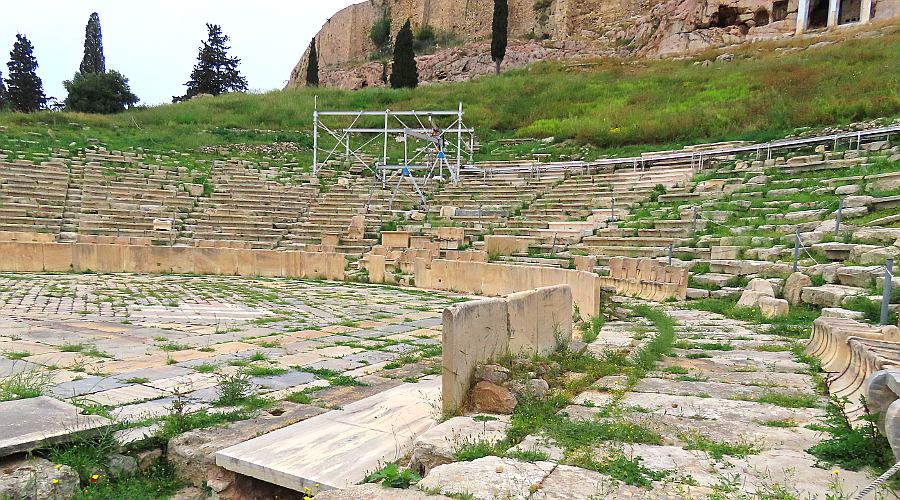
Theatre of Dionysus Thursday began with a timed entry to another UNESCO World Heritage site, the Acropolis, on a hilltop surrounded by modern Athens. As recommended the day before by Dimitris, we used the side entrance, which was also the closest to our hotel. We walked the grounds past ruins dating back to 1,600 BC, starting with the Theatre of Dionysus, which was constructed in the 6th century BC and was the world's first theater. BTW: Some of you may wonder why I have been using BC and AD, rather than BCE and CE. Although the new terms (Before Common Era/Common Era) are used by academics, the earlier terms (Before Christ and Anno Domini) were used exclusively in the English translations during our trip and I believe are still clearer to more people. We slowly made our way around and up the hill, eventually passing the Odeon of Herodes Atticus, which was built in 160-169 AD and is used for musical events and theatrical performances to this day.
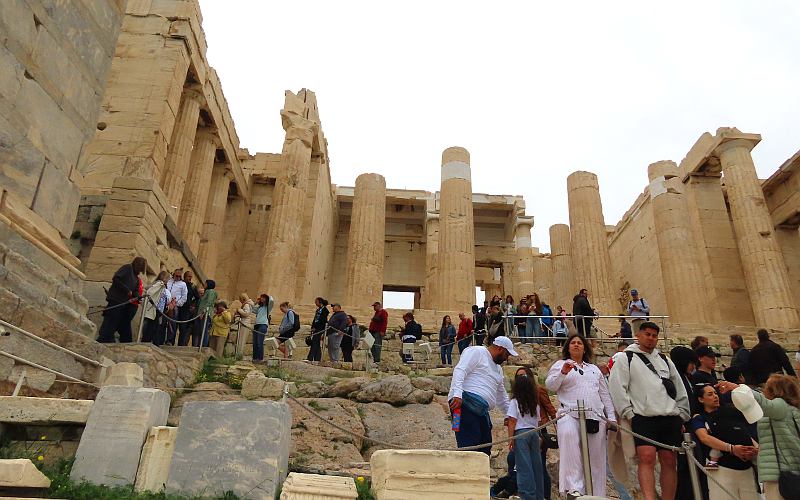
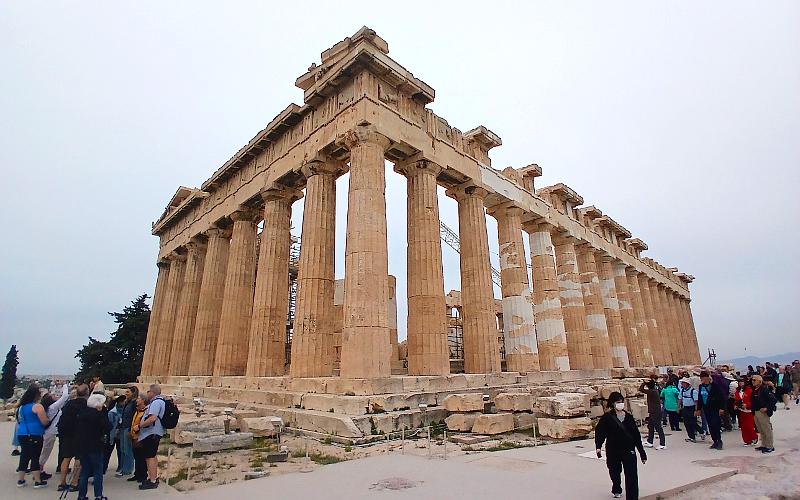
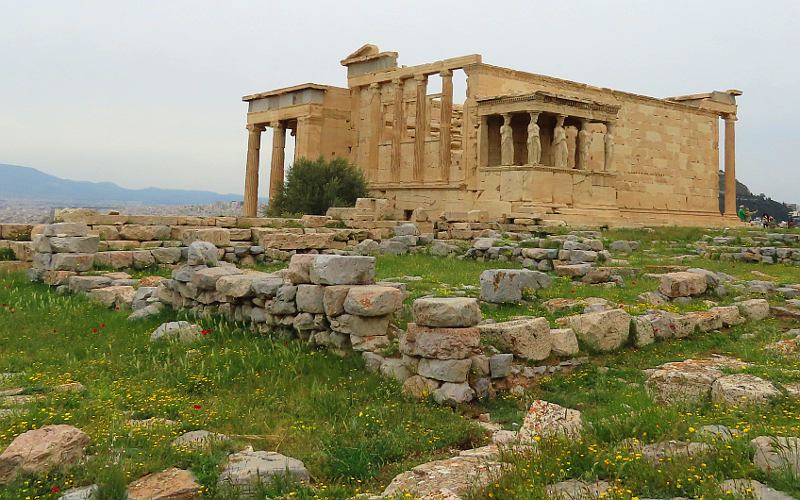
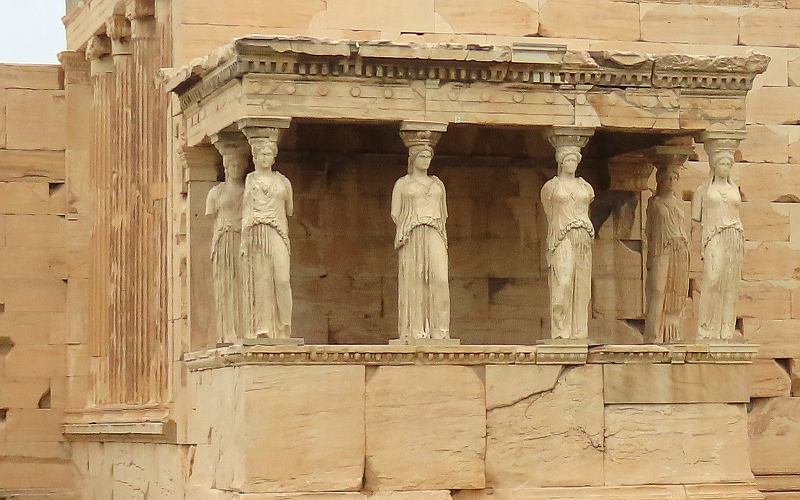
The citadel at the top of the rocky outcrop has the remains of several ancient buildings, with the most notable being the Parthenon, Erechtheion, and the grand entrance through the Propylaia. Restoration and preservation has been going on for decades and was being done while we were there.
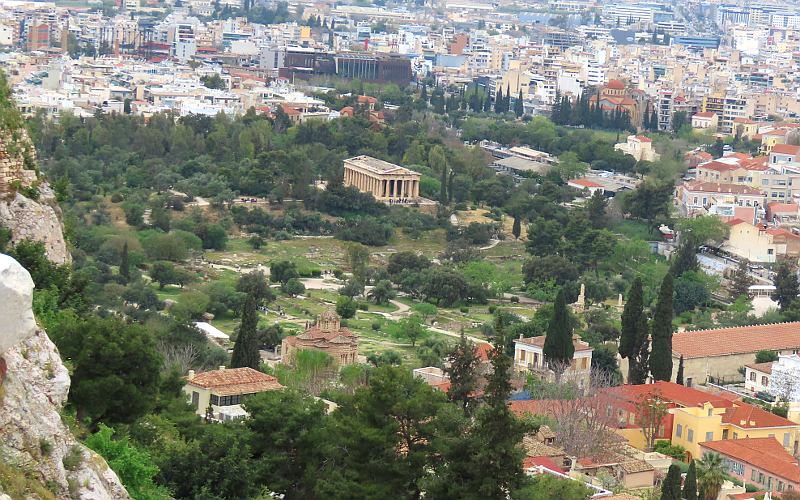
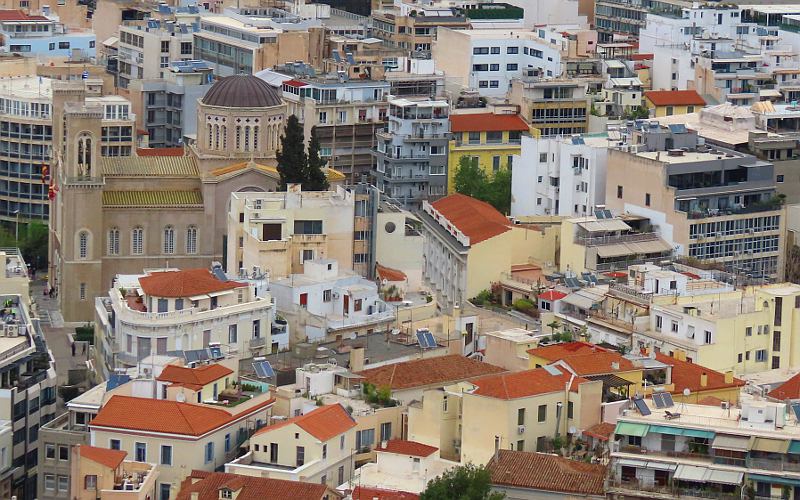
In addition to enjoying the structures and ruins on the top itself, there are magnificent views. After some orientation, we were able to identify the area of Athens we were now familiar with and locate our hotel.
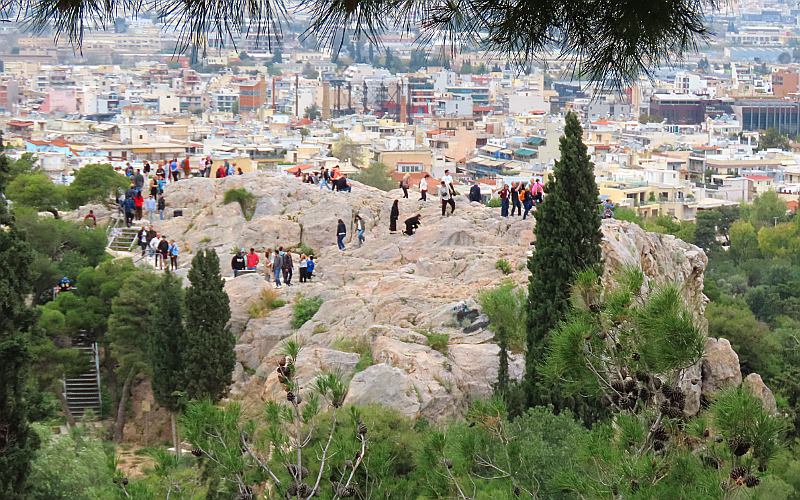
As we came down from the top, we spotted the Areopagus, a nearby rock hill where the Apostle Paul delivered the sermon recorded in Acts 17:16–34.
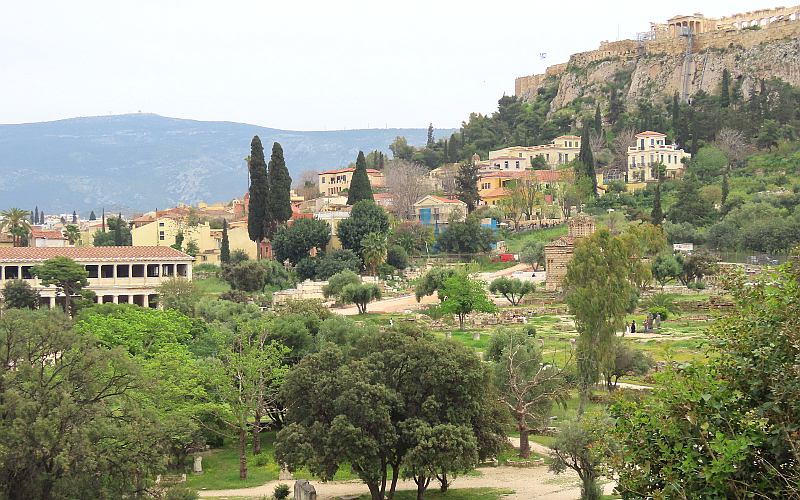
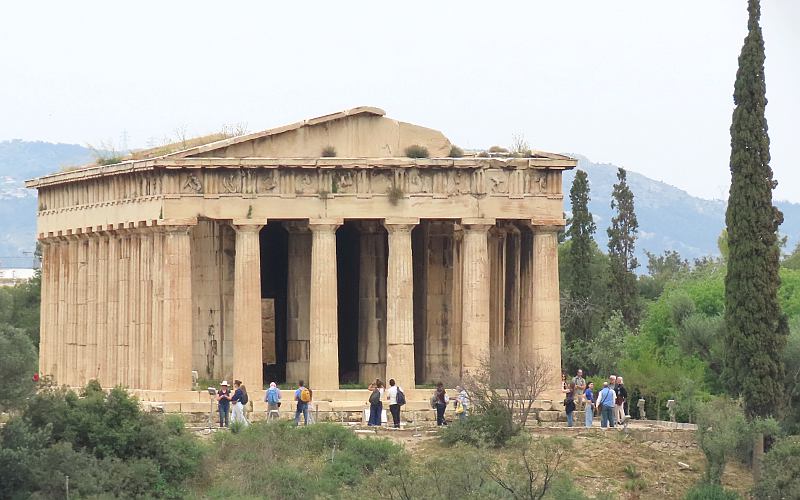
We had lunch at Strofi, which was recommended most for its view from the foot of the Acropolis, but I was very happy with the food and service. Our plans for the rest of the day were flexible, and although I had originally been planning to go on to the Acropolis Museum, we had spent a lot of time in museums of various sizes and I felt we would better appreciate going to the Ancient Agora, which includes a smaller museum. The Ancient Agora of Athens was the center of Athenian democracy. It was founded in the 6th century BC, and excavations have been going on since 1931.
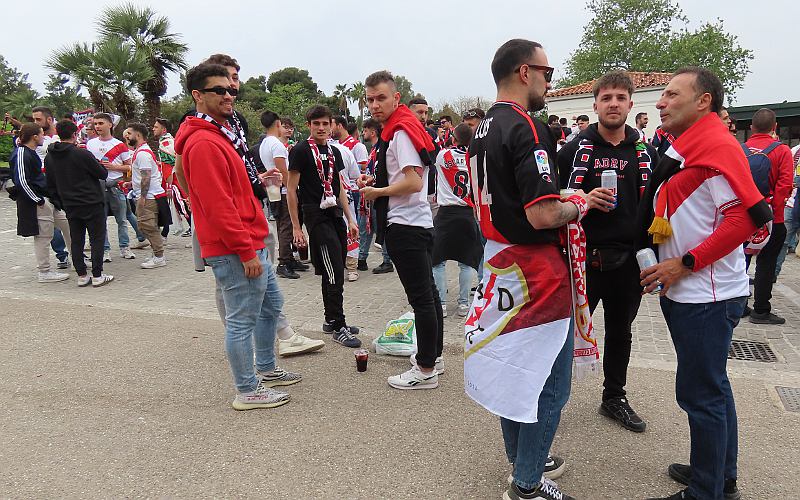
Making our way back to our hotel, we saw more of Athens, including the ruins of Hadrian's Library, a protest of the war in Iran, and an area filled with singing and partying fans of Rayo Vallecano, a football club from Madrid, Spain. We had heard their chants earlier in the day while we were in the Ancient Agora.
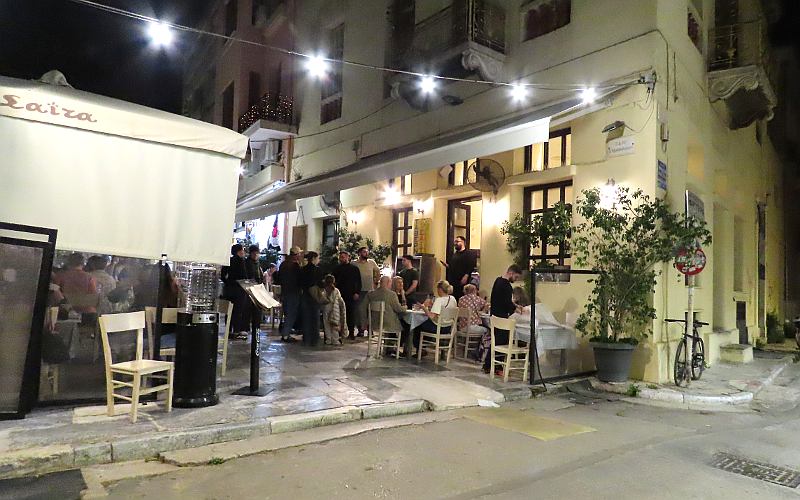
In the evening we had supper at Taverna Saita, a 50 year old traditional family koutoukia or informal basement restaurant. The dining was outside at tables on a pedestrian walkway. Linda had a souvlaki special with chicken, pork & sausage, while I had a herring fillet appetizer and grilled sardines, along with a half liter of the nice house rosé wine for only 5 euros.
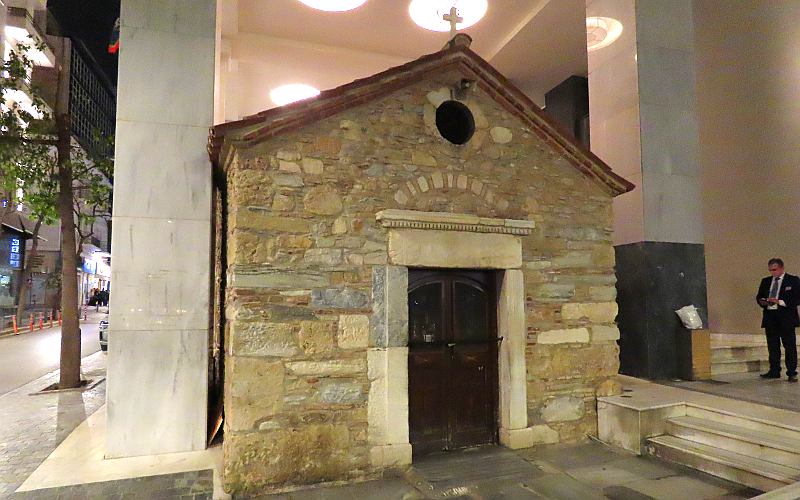
On the way back to our hotel, we passed the Church of Agia Dynami, a tiny 16th century Orthodox church which was linked by an underground tunnel to a small gunpowder plant that was used to smuggle weapons from a nearby arms maker during the Greek War of Independence. The Electra Metropolis Hotel is built around it and the church is still in use.
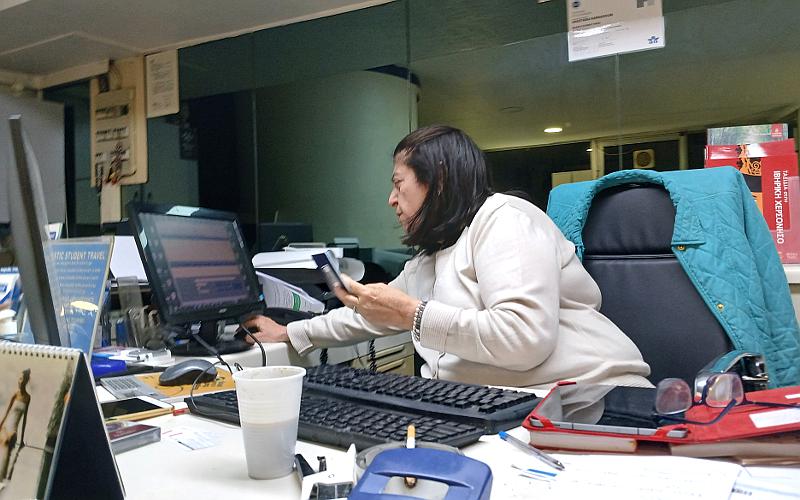
After supper, I made plans for our next day trip to Aegina Island. It was recommended that ferry tickets be purchased the evening before at a travel agency. Only a couple of the nearby offices were still open, but they were across the street from each other and I headed out to the higher rated one. It was actually closed, so I went to the other, where a woman was working alone and chain smoking. Arranging the ticket purchase was difficult for her, but after about 30 minutes I left with one way tickets both ways and we were set for the day.
|